Articles, Investing, News
Rocket Lab Backlog Jumps 52% in a Quarter to $3.6 Billion, Neutron Waits Until 2027
KEY POINTS
- Rocket Lab’s third-quarter revenue rose 73% to $267.8 million, above the top of its $250 million to $265 million guidance.
- Backlog reached about $3.6 billion at the end of September, up 52% from June, while Neutron’s first flight is now set for no earlier than 2027.
- At the Nov. 9 close of $58.86, the stock is 61% below its 52-week high of $151 and carries a market value of about $40 billion.
Rocket Lab Corporation (RKLB) reported third-quarter results on Nov. 9, and the backlog is the number to start with: about $3.6 billion, up 52% from the end of June. Revenue also came in at $267.8 million, up 73% from a year ago and above the top of the company’s own guidance.
The stock closed that day at $58.86, up 10.9% going into the report, then slipped about 6.5% after hours to $55.02. Either way, it is still 61% below its 52-week high of $151. So the quarter was good, the stock is still far from its peak, and the question is what the price already assumes. Let’s start with the numbers.
Q3 Revenue Rose 73% and Beat the Top of Guidance
Revenue of $267.8 million compares with $155.1 million a year earlier. Management had guided to $250 million to $265 million in August, and analysts were looking for about $257.2 million, so the quarter beat the Street by 4.1%. Product revenue was $197.5 million and services added $70.3 million.
Margins were mixed. GAAP gross margin came in at 33.6%, which clears the 29% to 31% range the company gave in August but sits below the 37.0% from a year ago. Adjusted EBITDA was a loss of $18.0 million, inside the $17 million to $23 million guide and better than the $26.3 million loss in Q3 2025.
Now, the part that looks ugly. The GAAP net loss was $79.7 million, or $0.12 a share, against $18.3 million, or $0.03, a year ago, and wider than the $0.05 loss analysts expected. To be fair, last year’s figure got a lift from a tax benefit of about $41 million, and the pre-tax loss back then was $59.3 million. Even so, the loss grew, which is why I would rather judge this quarter on adjusted EBITDA, where the loss narrowed.
That brings us to the backlog, which is where the quarter really stood out.
Backlog Jumped 52% in One Quarter to $3.6 Billion
Backlog was about $3.6 billion at the end of September, versus $2.36 billion at the end of June. Launch makes up roughly 52% of it and space systems about 48%. The company also said it signed about $1 billion of new launch contracts across Electron, HASTE and Neutron, plus $470 million for space systems.
About 32.9% of the backlog is expected to turn into revenue within 12 months. By my math, that is roughly $1.2 billion of work scheduled for the next year, against an annualized pace of about $1.1 billion from the fourth-quarter guidance. In other words, a good chunk of next year is already under contract.
Fourth-quarter guidance points the same way. Revenue is guided to $270 million to $290 million, a midpoint of $280 million that sits about 5.5% above the $265.4 million analysts had penciled in. GAAP gross margin is guided to 34% to 36%, and the adjusted EBITDA loss to $14 million to $20 million.
The catch is that more than $515 million of the third-quarter bookings were Neutron contracts from constellation operators, and those only become revenue after the rocket flies. So let’s talk about when that is.
Neutron Slipped to 2027 and the Stock Took the Hit
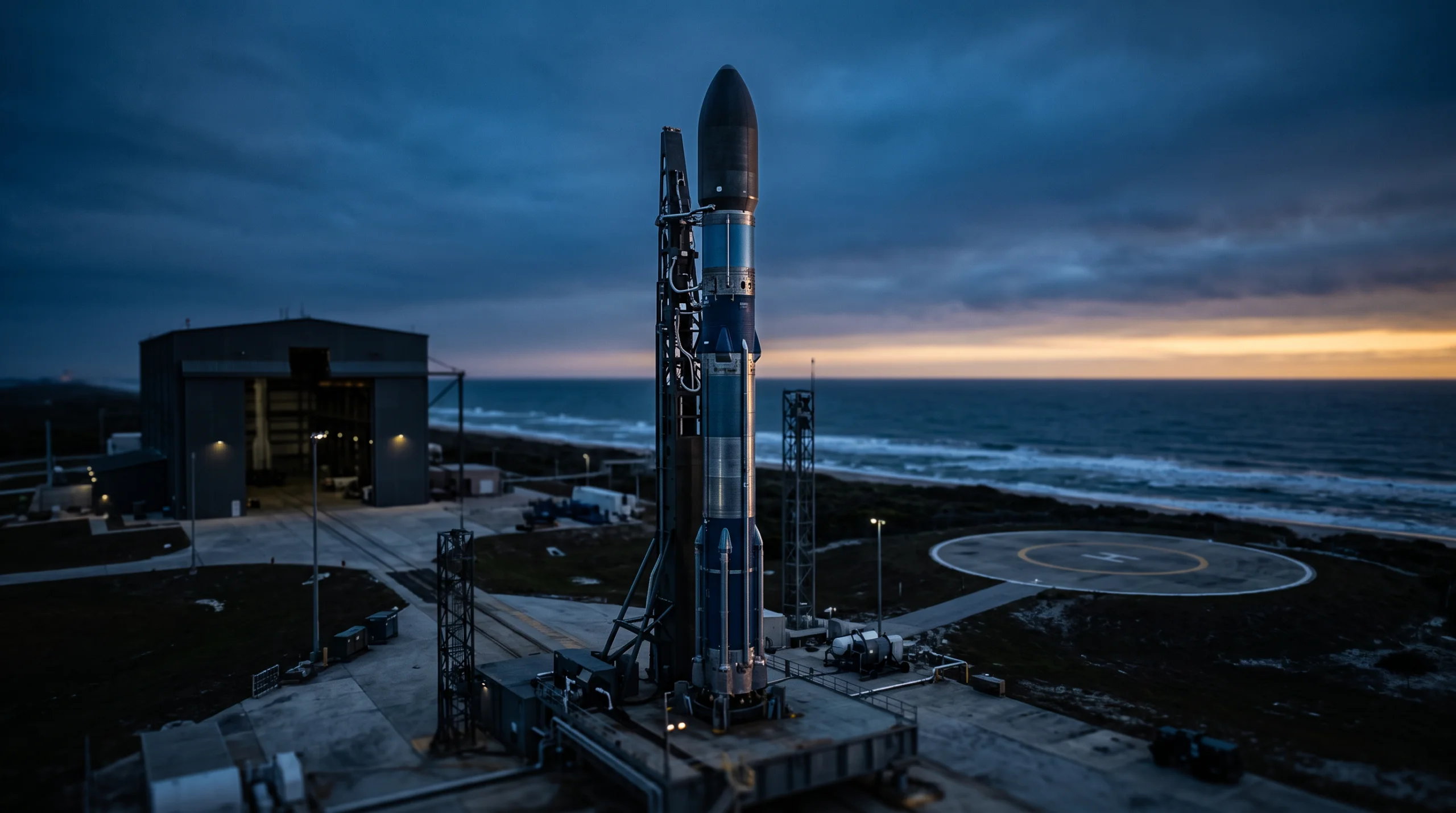
On Oct. 14, management said Neutron’s first launch is now targeted for no earlier than 2027, after voids were found in the propellant tank forward domes. The stock closed at $64.22 the day before, $59.18 that day and $55.25 the day after, then bottomed at $45.99 on Nov. 5. At $58.86, it is back to roughly where it was when the delay was announced, up 28% from that low.
The delay matters for two reasons. First, Rocket Lab’s CFO has said adjusted EBITDA should turn positive within six months of a successful Neutron test flight, so every quarter of slippage pushes profitability out too. Second, the demand is there: 16 Neutron missions are booked, with the next open slots in the 2030s, and several carry a base price of $70 million per launch. The rocket is worth waiting for if it works. The question is how long investors will pay up while they wait.
I walked through the Electron launch pace and the Neutron delay in a video earlier this month, and the longer version is below.
What $58.86 a Share Already Assumes About 2030
Rocket Lab guided to about 681 million basic shares for Q4, including roughly 41 million preferred. At $58.86, that is a market value of about $40.1 billion. Take off $4.70 billion of cash and securities and the enterprise value is about $35.4 billion, or roughly 32 times the annualized fourth-quarter guidance and 27 times the $1.33 billion analysts expect for 2027.
Since there are no earnings to value, I ran three simple scenarios. Each one picks a 2030 revenue figure and a sales multiple, adds cash, and discounts the result back at 12% a year. To keep it clean, I left Iridium out on both sides, which means I subtracted the roughly $2.86 billion cash payment from the cash pile and used no Iridium shares or earnings.
| Scenario | 2030 revenue | Sales multiple | Growth needed, 2026 to 2030 | Value per share |
|---|---|---|---|---|
| Bear | $2.0 billion | 5x | 20% a year | $10.88 |
| Base | $3.5 billion | 8x | 38% a year | $27.41 |
| Bull | $5.5 billion | 12x | 55% a year | $62.31 |
Growth is measured from the $959 million analysts expect for 2026. The takeaway is that today’s price already sits near the top of my bull case. Working backward, at 8 times sales, Rocket Lab would need about $7.8 billion of revenue in 2030 to earn a 12% annual return from here, which is growth of roughly 69% a year for four years.
Analysts are more optimistic. The average price target is $102.15, and 18 of 22 analysts rate the stock a Buy or Strong Buy. Those are their views, not mine, and they lean on Neutron working and Iridium adding earnings. That is also the fair counterpoint to my math, since Iridium is the piece I left out.
The Risks: Wider Losses, More Shares and a Pending Deal
Cash burn is not the problem right now. Rocket Lab ended September with about $4.70 billion in cash and securities. Operating cash flow turned positive at $7.2 million in Q3, compared with a $84.1 million outflow in Q2, and after $31.1 million of capital spending, free cash flow was about negative $23.9 million versus negative $110.1 million last quarter. Management still expects free cash flow to stay negative in Q4.
The concern that does matter is the share count. The company finished its at-the-market stock program in September after raising about $2.4 billion from 36.8 million shares, and the Q4 guide of 681 million shares is up from about 589.5 million at the start of the year, or 15.5%. That is the price of the cash cushion.
And there is more to come. The acquisition of Iridium Communications Inc. (IRDM) is still pending. Management says it is fully funded and Iridium shareholders have approved it, but regulators still have to sign off and no closing date was given. Iridium holders also get Rocket Lab stock, and under the deal’s collar, an average price at or below $67.50 hands out the maximum of about 42.4 million shares. With the stock at $58.86, that is where it points today, which would add roughly 6% to the 681 million.
What to Watch Between Now and the Next Report
The next checkpoints are concrete. Fourth-quarter revenue needs to land inside $270 million to $290 million with GAAP gross margin between 34% and 36%. Management also needs to put a firm date on Neutron, since a window of “no earlier than 2027” is not something investors can plan around. And the Iridium approval would turn the largest open question in the story into a number.
If those pieces arrive on time, the backlog gives the business cover while it waits for Neutron. If Neutron slips again, the distance between the $58.86 price and the $27.41 base case gets harder to ignore.
This article is for informational and educational purposes only. It is not financial, investment, tax or legal advice, and it is not a recommendation to buy, sell or hold any security. I am not a registered investment advisor, so consult a licensed professional before investing. On the date of publication, the author did not have any direct or indirect position in any of the securities mentioned in this article. Investing involves risk, including the possible loss of principal, and past performance does not guarantee future results. Analyst estimates, price targets and the valuation scenarios in this article are illustrations based on assumptions, not predictions, and actual results may differ materially. Market data pulled November 10, 2026. Figures may be delayed or contain errors and change quickly, so verify current numbers before acting. Analyst ratings and other third-party views are reported as news and are not endorsed by me. Information may have changed since publication.